
Google Lowers Audience Size Limits: A Big Win for Small Advertisers in Google Ads
Google lowers audience size limits, and honestly, this is one of the most practical Google Ads updates we have seen in a long time. If you are a small advertiser, blogger, niche site owner, or someone just testing paid ads with a limited budget, this update directly affects you.
🔗 Related Articles:
Share of Search: Why It Matters More Than Traffic in the AI Era
Cyber Week Hosting Sale: Grab Up to 75% Off Hosting + Free Domain Before It Ends
How to Start a Blog and Make Money in 2025 – A Beginner’s Complete Guide
🛠️ Best Tools for Blogging Every Beginner Should Use (2025 Guide)
For years, Google Ads felt slightly unfair to small accounts. Big brands with massive traffic could easily use remarketing and customer lists, while smaller creators were locked out due to minimum audience requirements. That gap has finally started to close.
In this article, we break down what changed, why it matters, how advertisers are reacting, and what you should do next. We will also share our honest take as bloggers and marketers who understand the struggle of running ads with limited data and tight budgets.
Google Lowers Audience Size Limits Across Ads Networks
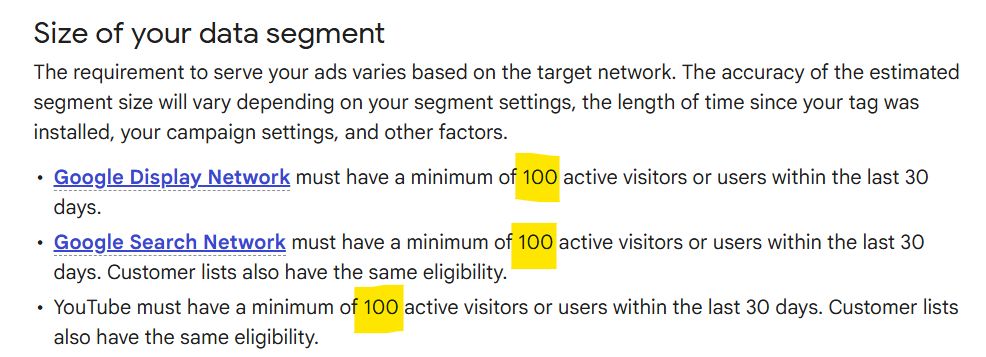
Google lowers audience size limits across its advertising ecosystem, reducing the minimum required audience size to just 100 active users.
This update applies to:
- Google Search
- Google Display Network
- YouTube Ads
- Remarketing lists
- Customer match lists
- Audience Insights
Earlier, advertisers needed at least 1,000 users to activate many audience-based strategies. That number was a dealbreaker for niche sites, local businesses, and new advertisers. Now, even smaller datasets can unlock powerful targeting options.
In simple words, Google Ads is no longer only for big players.
What Exactly Changed in This Update?
Google Lowers Audience Size Limits to 100 Users
The biggest change is straightforward. Google lowers audience size limits from 1,000 users to 100 users across all major ad formats and audience types.
This means:
- Remarketing lists can activate faster
- Customer lists become usable much earlier
- Audience Insights show data sooner
- Small accounts can finally test audience strategies
Before this, many advertisers collected data for months but still could not use it. Now, even early-stage traffic becomes valuable.
Google Lowers Audience Size Limits for Audience Insights
Audience Insights also benefits from this update. Previously, advertisers needed at least 1,000 users for insights to appear. Now, with Google lowers audience size limits, insights show up at just 100 users.
This helps advertisers understand:
- Who their audience is
- Interests and behavior
- Demographics and intent signals
For beginners, this is gold. Data clarity arrives earlier instead of months later.
Why Google Lowered Audience Size Limits Now
Google did not do this randomly. The advertising world is changing fast.
Here is what is happening behind the scenes:
- Third-party cookies are fading
- First-party data is becoming critical
- Small businesses are demanding fairer access
- Privacy rules are getting stricter
By lowering audience thresholds, Google encourages advertisers to rely on their own data rather than external tracking.
In our view, Google lowers audience size limits because it needs advertisers to stay active and competitive in a privacy-first future.
Why This Update Matters for Small Advertisers
Google Lowers Audience Size Limits and Removes a Major Barrier
For small advertisers, this update is not “nice to have.” It is game-changing.
Previously, you needed:
- High traffic
- Long waiting periods
- Larger budgets
Now you need:
- Just 100 real users
- A focused strategy
- Smart targeting
This opens doors for:
- Bloggers
- Affiliate marketers
- Local businesses
- Niche eCommerce stores
- Content creators
Google lowers audience size limits, and suddenly, personalization becomes realistic for everyone.
Real-World Example for Bloggers and Creators
Imagine you run a blog like Desi Blogger Life and get 150 to 200 visitors per month on a single article.
Earlier:
- No remarketing
- No customer lists
- No audience insights
Now:
- You can retarget readers
- Test YouTube remarketing ads
- Build smarter search campaigns
That is a massive shift.
How Advertisers Are Reacting Online
Fans and marketers are reacting positively to this update.
Many small advertisers are saying:
- “Finally, Google Ads is usable for us”
- “This saves months of waiting”
- “Now our data actually matters”
On LinkedIn and marketing forums, reactions show relief and excitement. People who were stuck at 300 to 500 users now feel included.
Fans are reacting like this because Google lowers audience size limits solves a real pain point, not just a cosmetic change.
What You Should Do After Google Lowers Audience Size Limits
Immediate Actions to Take
If you use Google Ads or plan to, do this now:
- Recheck your remarketing lists
- Activate customer match lists earlier
- Explore Audience Insights again
- Test small-budget remarketing campaigns
- Optimize first-party data collection
Smaller audiences mean higher relevance if used correctly.
Mistakes to Avoid with Smaller Audiences
While Google lowers audience size limits, smaller lists need careful handling.
Avoid:
- Over-targeting
- High frequency ads
- Aggressive bidding
Smaller audiences burn out faster. Focus on value, relevance, and timing.
Privacy and Performance: What to Watch Next
One big question remains. How will privacy safeguards evolve?
With smaller audiences:
- Data sensitivity increases
- Privacy controls must stay strong
- Transparency matters more
Google will likely monitor performance and user safety closely. We may see more guardrails added in the future.
Still, Google lowers audience size limits without compromising advertiser trust, which is a positive sign.
Our Honest Take as Bloggers and Marketers
In our view, this update feels overdue but welcome.
For years, Google Ads quietly favored scale. Small creators were expected to “wait” or “grow first.” That mindset no longer works in today’s creator economy.
As someone building blogs, testing monetization, and learning ads step by step, we see this update as encouragement. It tells small advertisers that their data has value, even at early stages.
Google lowers audience size limits, and for once, it feels like Google is listening.
Bottom Line: Google Lowers Audience Size Limits for Everyone
To sum it up:
- Minimum audience size is now 100 users
- Applies across Search, Display, YouTube
- Benefits small and niche advertisers
- Encourages first-party data use
- Improves accessibility and fairness
By lowering the barrier, Google is opening advanced targeting tools to a wider audience. Whether you are running ads today or planning to in the future, this update changes the game.
Personal Outro from Desi Blogger Life
If you are a small blogger or creator feeling overwhelmed by ads and algorithms, take this as a reminder. You do not need massive traffic to start smart marketing anymore.
Start small. Learn slowly. Test carefully.
Updates like this prove that even big platforms are slowly adjusting for smaller voices. And that, honestly, gives hope.